THE LEGEND
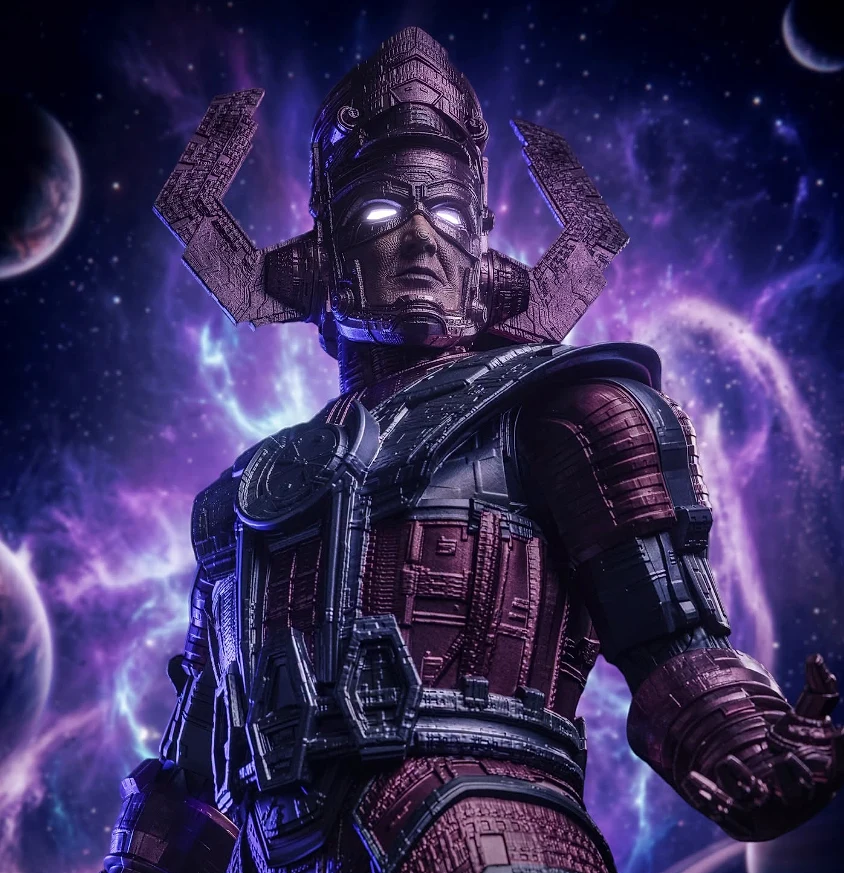
Before the universe as it stands now, there was another, and it ended. From the collapsing heart of that dying cosmos, a single being survived the transition: Galan of Taa, last son of a world that burned itself out chasing its own hungers. The newborn universe did not welcome him gently. It remade him. What emerged from that crossing was no longer a man but a force wearing the shape of one, purple and silver and vast, older than the stars he now moved among. He took a name to match what he had become: Galactus.
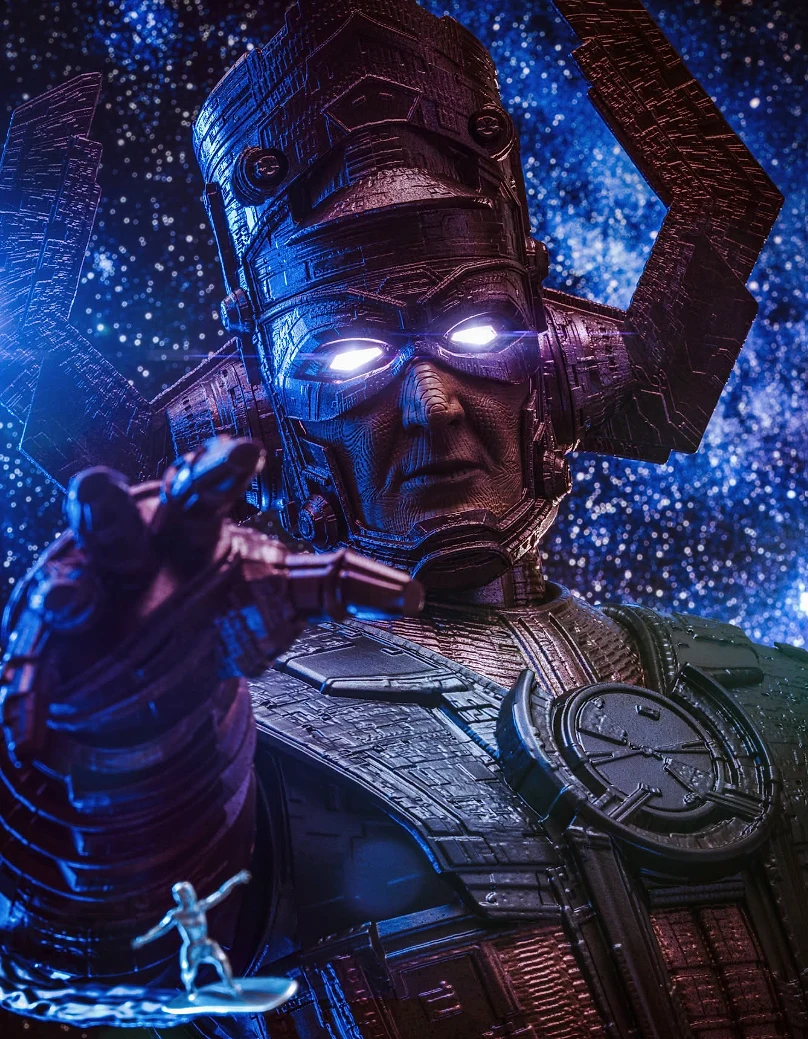
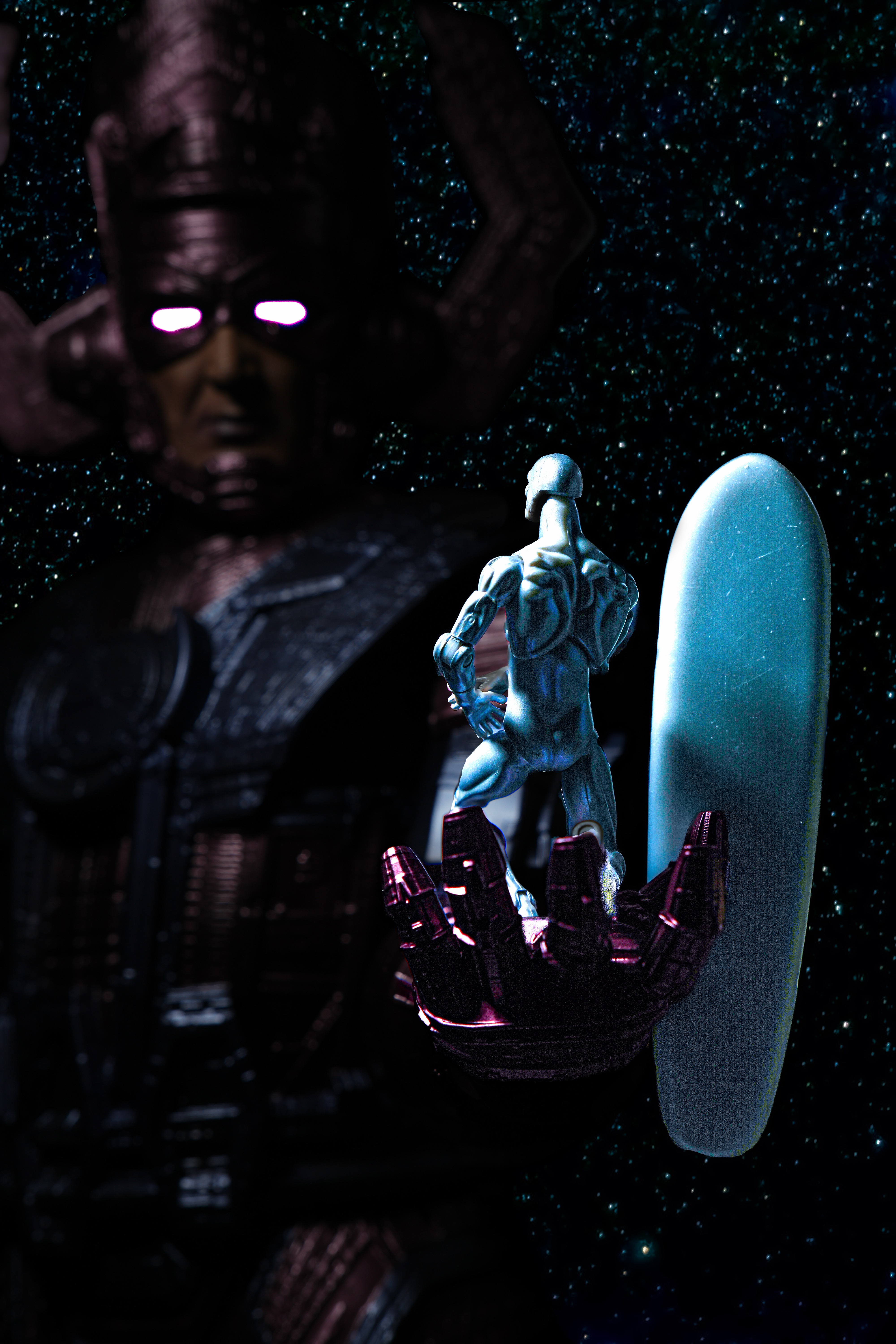
He does not conquer. He does not hate. He arrives, ancient and inevitable, trailing a herald ahead of him like a lantern in deep water, and he feeds, because the alternative is his own unmaking and the unraveling of the balance he embodies. Planets that stood for a million years vanish between one dusk and the next. Empires kneel, beg, bargain, and are answered with silence. He is not the villain of the story he is in. He is the price the story has always demanded, paid in worlds.
OFF THE PAGE
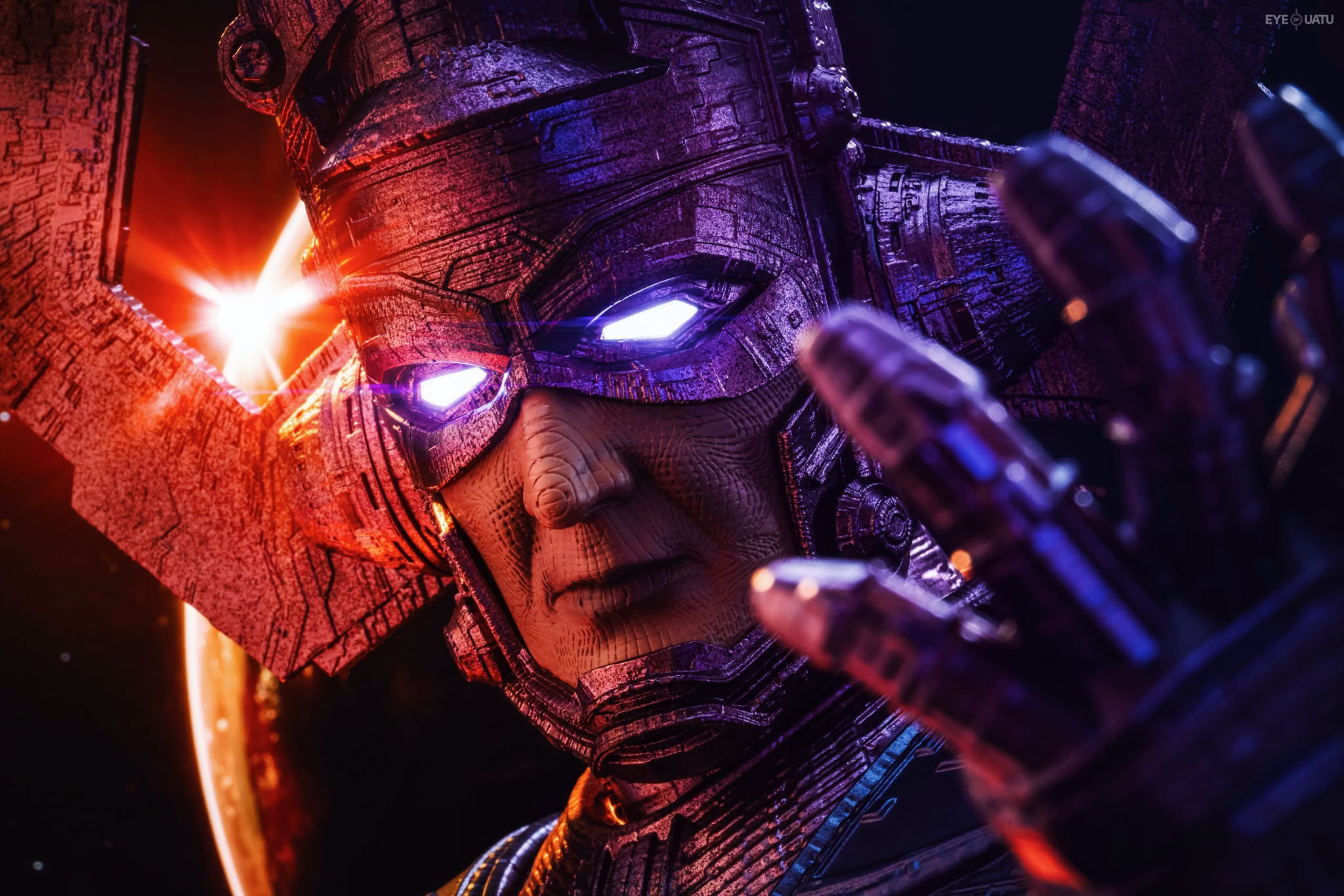
Galactus first loomed over Manhattan in Fantastic Four #48 (1966), the opening chapter of what fans still call the Galactus Trilogy, created by Stan Lee and Jack Kirby during the single most inventive stretch either man ever had. Kirby needed a threat too big for fists, so he built a cosmic constant instead of a costume, and gave him a herald, the Silver Surfer, to be the human-scaled face of an inhuman problem. The design, that towering purple and blue armor, became one of Kirby's most instantly recognizable creations, endlessly redrawn by every artist who has taken a swing at the character since.
Live action has struggled to match the page. Fantastic Four: Rise of the Silver Surfer (2007) reduced him to a cloud, a choice fans never forgave. The Fantastic Four: First Steps (2025) course-corrected hard, restoring the full Kirby-scaled figure, with Ralph Ineson providing voice and performance to finally give audiences the world-eater the comics had been drawing for decades.
 SHOWCASENo. 60
 2 PHOTOS
 3
3 3
3

 8 PHOTOS
 2
2