4FIGURES
1MAKERS
2024EARLIEST
2024LATEST
THE LEGEND
Toshiro Mifune was born on 1 April 1920 in Qingdao, in Japanese-occupied China, and grew up in Dalian, where his father ran a photography business. During the Second World War he served in the army air service's aerial photography unit. After the war he applied to Toho's camera department, was entered into the studio's new faces contest instead, and was one of a few dozen chosen from thousands.
He made his first film in 1947, and in 1948 began a partnership with director Akira Kurosawa that ran through Drunken Angel, Rashomon, Seven Samurai, Throne of Blood, Yojimbo, Sanjuro and Red Beard. He won the Volpi Cup for Best Actor at Venice twice, for Yojimbo in 1961 and Red Beard in 1965. He played Miyamoto Musashi in Hiroshi Inagaki's Samurai Trilogy, founded Mifune Productions in 1962, and reached American television audiences as Lord Toranaga in Shogun in 1980. He died in Mitaka, Tokyo, on 24 December 1997, aged 77.
OFF THE PAGE
Mifune changed what a screen samurai could be. Before him the swordsman was usually a model of composure. Mifune played him restless, scratching, laughing, sullen, close to animal, and still somehow the most dangerous man in the frame. His Kikuchiyo in Seven Samurai is a peasant pretending to be a warrior, and his nameless ronin in Yojimbo, shrugging his way into a town at war with itself, set a template for the drifting gunfighter that Western cinema borrowed almost at once.
The Kurosawa films carried him far beyond Japan. Rashomon opened Japanese cinema to festival audiences in the West, and Mifune became the face of that discovery. Later he worked with international directors and played Admiral Isoroku Yamamoto in three films. His daughter has said he turned down George Lucas when offered a role in Star Wars. In 2016 he received a star on the Hollywood Walk of Fame, nearly two decades after his death. For collectors his appeal is simple: the samurai on their shelves owe their posture to him.
IN SIXTH SCALE
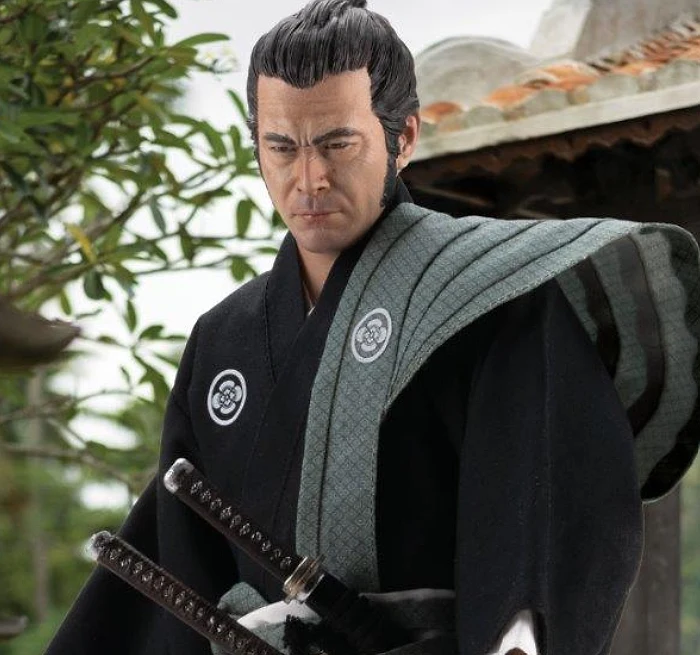
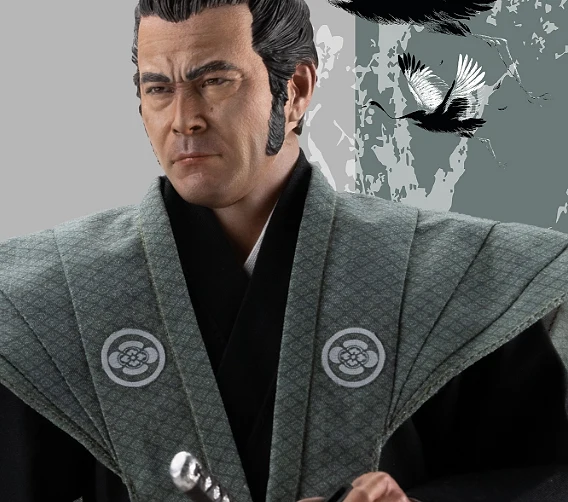
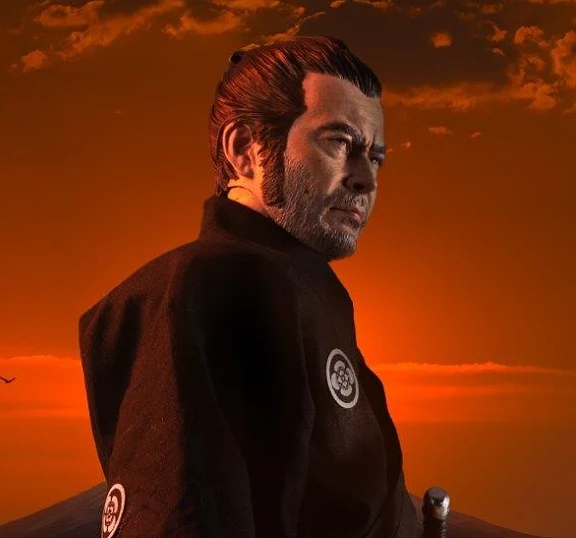
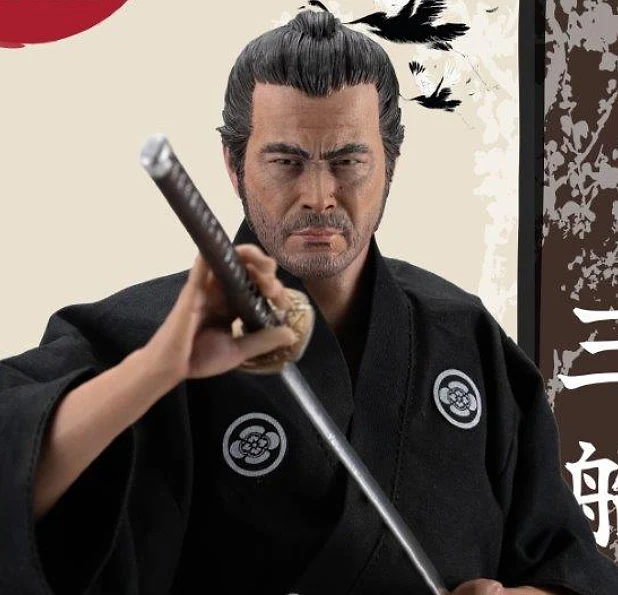
Mifune in sixth scale belongs to Kaustic Plastik, working with Infinite Statue on what the company calls its tribute line. The figures come as a pair of personas, a Ronin and a formal Samurai, sold separately and as a double pack, with an exclusive edition adding a stone lantern display. Rather than recreate a single film role, they distil the characters he played for Kurosawa: the Ronin in a black kimono bearing the Mifune family crest over brown hakama, with a katana and tanto that have metal blades, a gourd bottle, tabi socks and straw sandals.
Collectors here look for the things that matter on any period figure: a head sculpt that catches his scowl and stubble, tailoring that drapes like real cloth, and blades that sit properly in the sash. The Mifune figures share a shelf naturally with the wider Samurai archetype, the swordsman he did more than anyone to reinvent on film. Kaustic Plastik's other screen tributes, including Dale Cooper, show the same habit of picking subjects that film lovers will recognise at a glance. Browse Movies & TV for more.
RELEASES BY YEAR
4
20242024
BY MANUFACTURER
Kaustic Plastik
4
FRANCHISES
APPEARS IN
EVERY TOSHIRO MIFUNE FIGURE
newest first