 PREORDER LIVENo. 32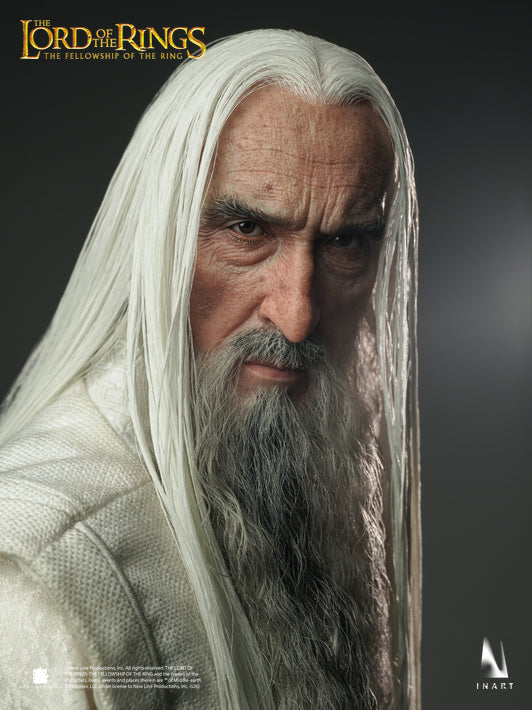
So You Have Chosen… Preorder 🧙♂️
The Kollectorium 1
1 3
3 4
4
134
56 sixth-scale figures across 3 manufacturers
The Lord of the Rings is J.R.R. Tolkien's tale of the One Ring and the Fellowship sent to destroy it, and for most collectors it means Peter Jackson's film trilogy, shot together and released in consecutive Decembers from 2001 to 2003, followed by his Hobbit trilogy. Few films have given sixth scale such a rich mix of subjects: kings and rangers, wizards, Elves, Dwarves, hobbits, and some of the most frightening villains ever put on screen.
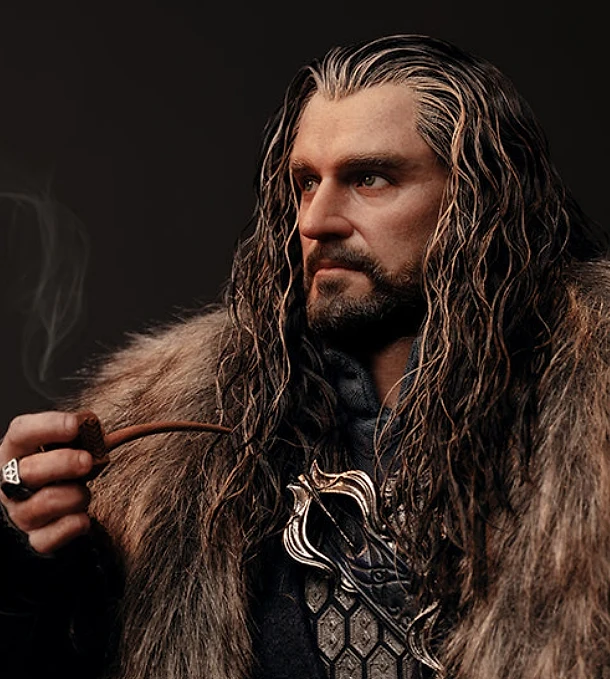
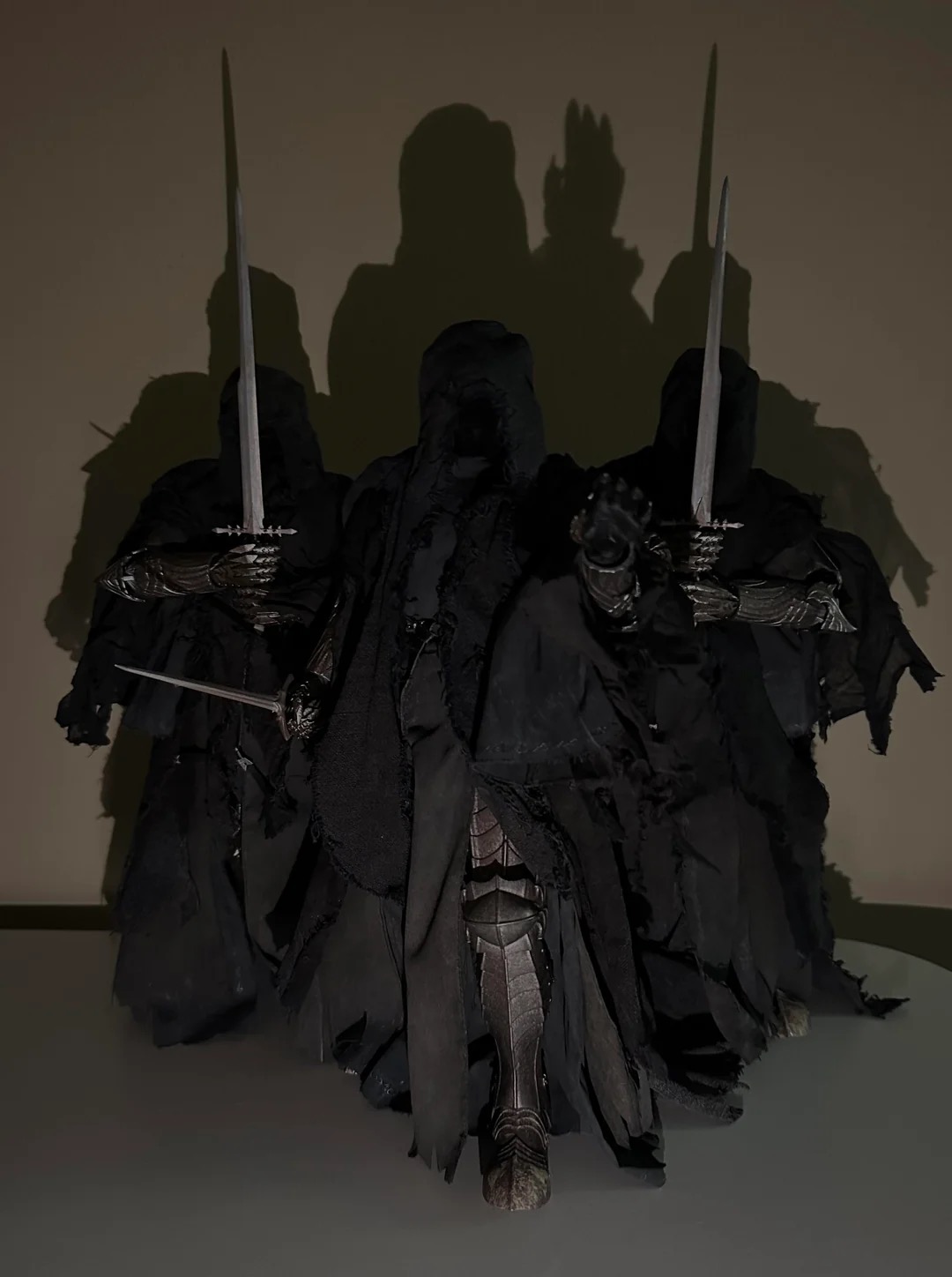
The twelve-inch story of Middle-earth belongs to [Asmus Toys](/manufacturer/asmus-toys). When the company won its license to make 1:6 Lord of the Rings figures, it began with the bad guys: the Morgul Lord, the [Witch-king of Angmar](/character/witch-king-of-angmar), with a helmet and armor parts made from real metal, followed by Gothmog. [Gandalf](/character/gandalf) the White came next as the line's first hero, and Asmus has since worked through the Fellowship and beyond, from [Aragorn](/character/aragorn) and [Legolas](/character/legolas) to [Arwen](/character/arwen), [Bilbo Baggins](/character/bilbo-baggins) and the Hobbit's [Thorin Oakenshield](/character/thorin-oakenshield). Together the figures read like a guided tour of Middle-earth, one army at a time.
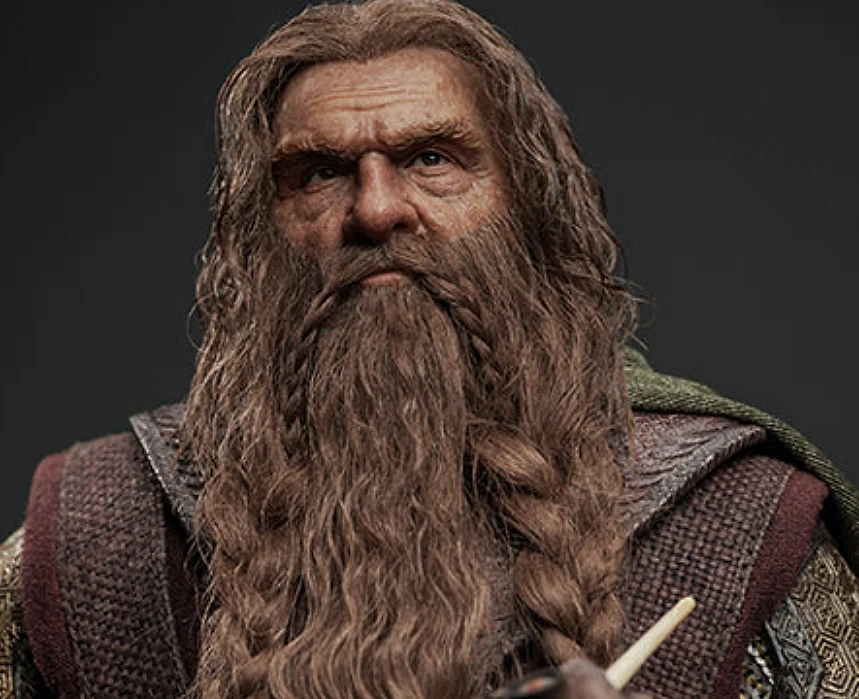
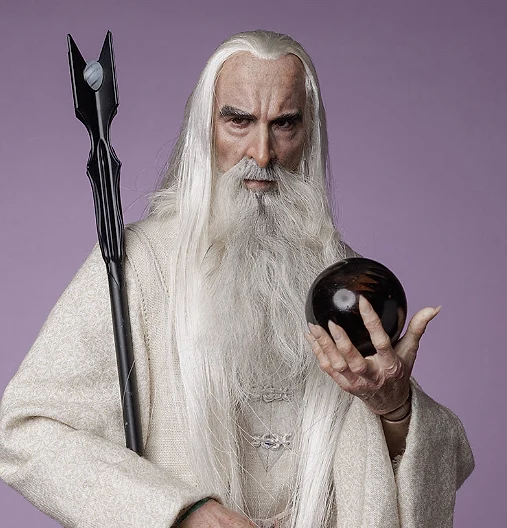
[InArt](/manufacturer/inart), the sixth scale line from Queen Studios, has added its own Middle-earth figures, including Gandalf and an Aragorn as Strider and King of Gondor with diecast swords. Its rooted hair and detailed portraits put a different spin on faces the Asmus line made familiar.
Lord of the Rings collectors usually start with the Fellowship and then decide how dark the shelf should go. The [Nazgûl](/character/nazgul), [Saruman](/character/saruman) and [Gollum](/character/gollum) sit naturally beside the heroes, and getting scale right takes some thought, because a properly sized hobbit stands well below a twelve-inch Aragorn, the way the films intended.
Every fantasy shelf in this Archive, every elf and dwarf and ranger from any franchise at all, descends from one Oxford professor who invented languages for fun and then needed somewhere for them to live. The Lord of the Rings is the source code of the genre, and at sixth scale it is a small, devoted kingdom with one great house, one hyperreal newcomer, and a catalogue that begins, delightfully, with the enemy.
Fair warning: this is a love letter. The dates are sourced and the numbers are ours, and if the Archivist occasionally lapses into calling the reading room "the Shire," the staff have stopped correcting it.
J.R.R. Tolkien survived the Somme, came home, and spent his life on two parallel careers: Oxford philologist by day, world-builder always. The languages came first, Elvish tongues built with scholarly rigor, and Middle-earth was constructed to give them speakers. In 1937 The Hobbit began with a sentence scribbled on a blank exam page, "In a hole in the ground there lived a hobbit," and in 1954 and 1955 The Lord of the Rings arrived after twelve years of writing, a war story about mercy, written by a man who had seen the opposite.
It became one of the best-selling books ever printed and the foundation stone of modern fantasy: every quest, every fellowship, every dark lord and reluctant hero since stands on it. Tolkien gave the genre its grammar the way he gave his elves theirs, completely, and first.
Hollywood spent decades declaring the books unfilmable, and then Peter Jackson filmed all three at once, in New Zealand, with a crew that treated the props like relics: real chainmail, forged swords, leatherwork with elvish tooling nobody would ever see on camera. The trilogy re-defined the event film, and The Return of the King closed it in 2004 by winning all eleven Academy Awards it was nominated for, a clean sweep never matched, including the first Best Picture ever given to a fantasy film.
For this hobby, that craftsmanship was a starting pistol. A universe built from real costumes and practical armour is a standing dare to figure makers, because the reference material already exists at human scale and every fan knows the tooling on Anduril's scabbard. Sixth scale answered the dare, though it took a decade to arrive properly.
The Archive's favorite catalogue accident: when Asmus Toys began numbering its Lord of the Rings line, LOTR001 was not Aragorn, Frodo or Gandalf. It was the Witch-king of Angmar in his Morgul Lord regalia, with the orc commander Gothmog as LOTR002 and more Nazgûl close behind. The licence's first catalogue numbers belong entirely to Mordor, and this site's running law, that villains photograph beautifully, adds another kingdom to its jurisdiction.
The shelves kept the faith: count the Nazgûl entries alongside their Witch-king and the black riders total six figures, out-collecting Aragorn himself at five. Meanwhile, in the most Tolkien statistic this Archive owns, Frodo Baggins and Samwise Gamgee stand at one figure apiece: the two hobbits who actually carried the Ring are the rarest heroes in the entire catalogue. The burden was always theirs alone. Apparently it still is.
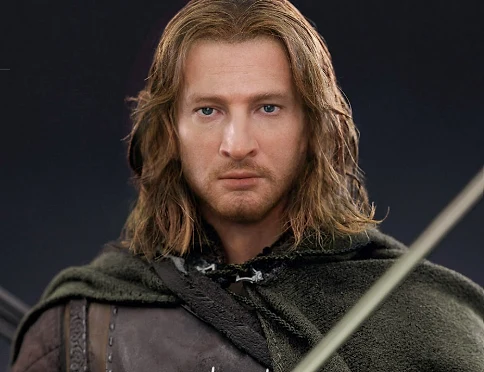
Eighty-five percent of this franchise belongs to one devoted maker: Asmus Toys holds forty-five of the fifty-three entries, a house that staked its identity on Middle-earth the way Rivendell staked its on memory. Rangers and kings, wizards grey and white, hobbits sold in pairs because Merry and Pippin were never going to be separated, and the deep bench besides: Faramir, Arwen, Gothmog, Guritz. Some of the line's early pieces are long discontinued, and their records survive in this Archive partly through recovered archival imagery, the library doing what libraries do.
The newcomer raises the stakes: InArt brought its rooted-hair, hyperreal standard to Middle-earth with eight entries and preorders running to 2027, giving the franchise its second act. The Hobbit's corner stands ready too, Thorin Oakenshield and Bilbo Baggins holding the door for Erebor. Two houses now keep Middle-earth, and neither shows any sign of leaving it.
All told: 53 Lord of the Rings figures from two manufacturers, spanning 2014 to preorders dated 2027. It is the Archive's most literary kingdom and its most faithfully tailored: real fabric cloaks, forged-look blades, and a catalogue whose villains arrived first and whose Ring-bearer remains its rarest treasure, which feels less like an accident than a thesis.
The road goes ever on, as the walking song insists, and this catalogue is still walking it. Even the Archive's own search box quotes Boromir on the subject of simply walking into places. One does not. One catalogues, carefully, and keeps the door to Middle-earth open for whoever comes up the path next.

2 notices from collectors about The Lord of the Rings, newest first
PREORDER LIVENo. 32134 SHOWCASENo. 20
 2
2 14
14