 FIGURE NEWSNo. 3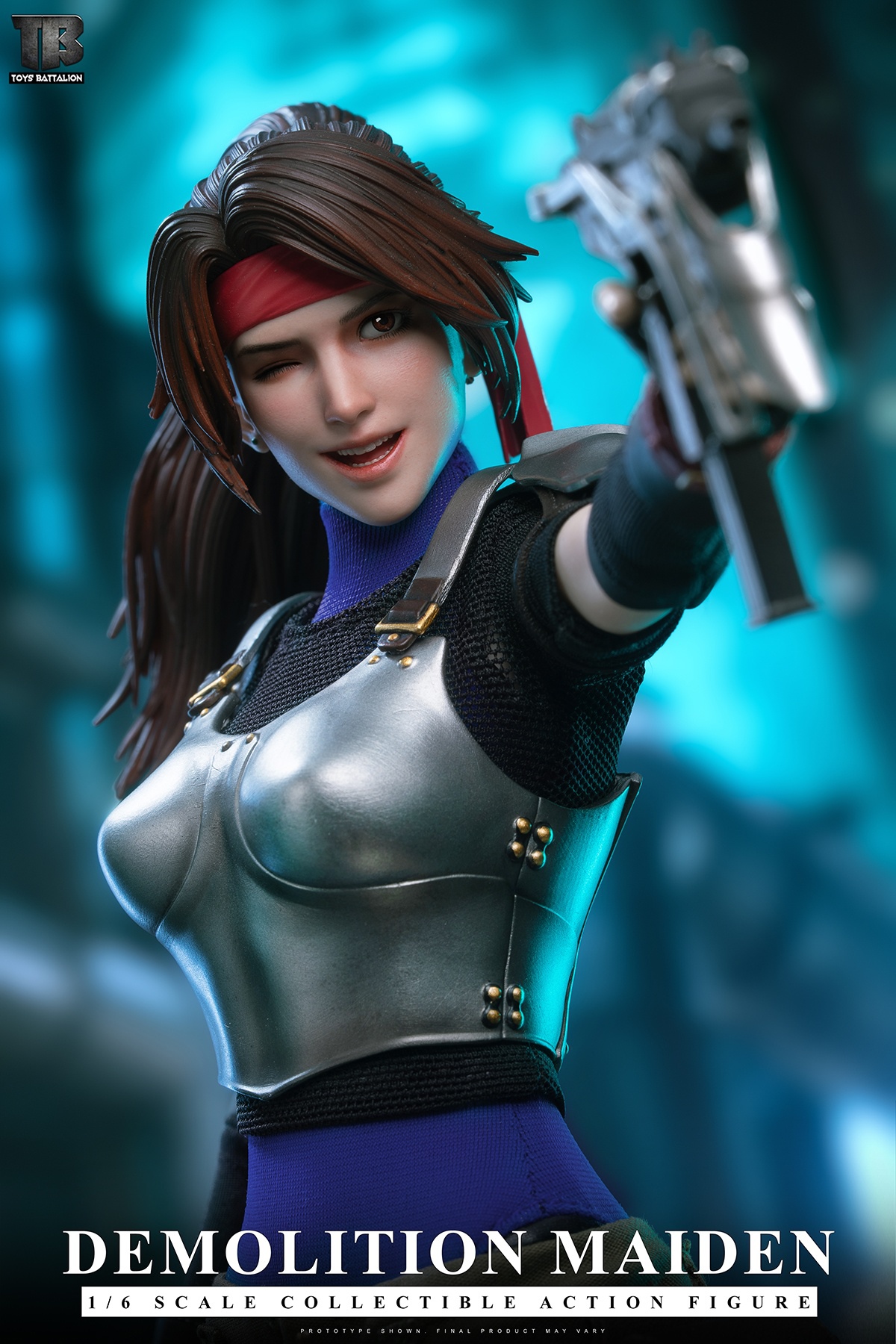
Demolition Maiden (jessie rasberry)
The Kollectorium 3
3 1
1 5
5
315
55 sixth-scale figures across 13 manufacturers
Final Fantasy began in 1987 as a role-playing game from a struggling Square, built by Hironobu Sakaguchi and, by one account, named for what might have been the company's last game. It became one of the best-selling Japanese RPG series in the world, and Final Fantasy VII in particular gave collectors a cast they have never stopped wanting on the shelf: [Cloud Strife](/character/cloud-strife), [Tifa Lockhart](/character/tifa-lockhart), [Sephiroth](/character/sephiroth) and [Aerith Gainsborough](/character/aerith-gainsborough).
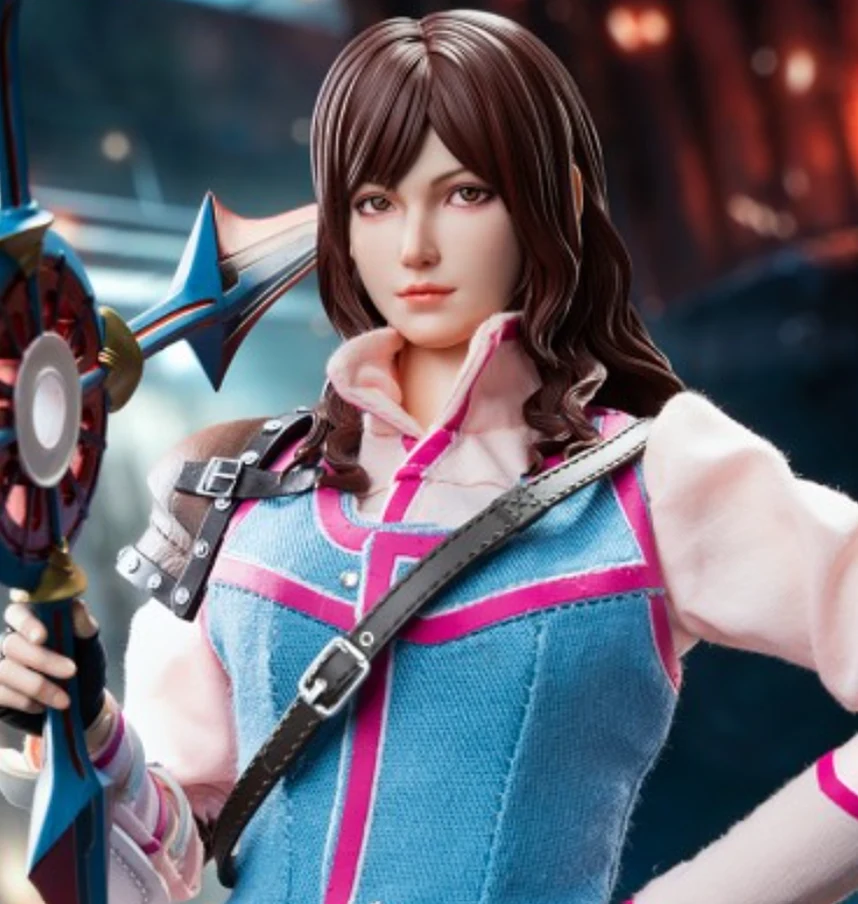
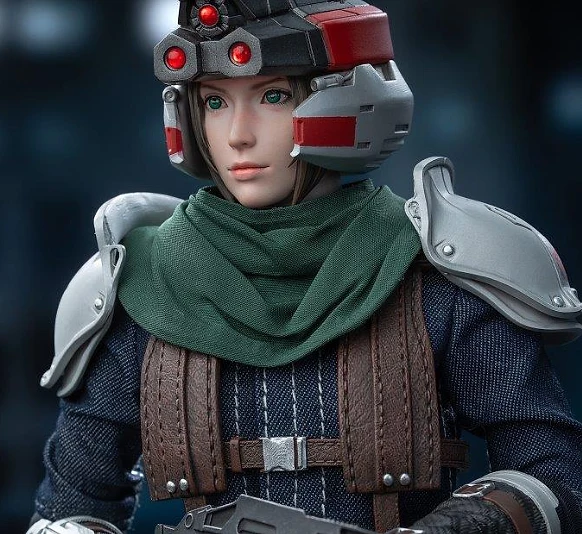
Square Enix makes its own figures through lines such as Play Arts Kai and Bring Arts. The twelve-inch shelf grew up elsewhere, built by independent studios, and much of it works in the coded style: figures sold under alternative names such as The Ancient for Aerith, Shuriken Maiden for Yuffie or Ancient Angel for Sephiroth. These are fan-driven tributes, and collectors treat them that way.
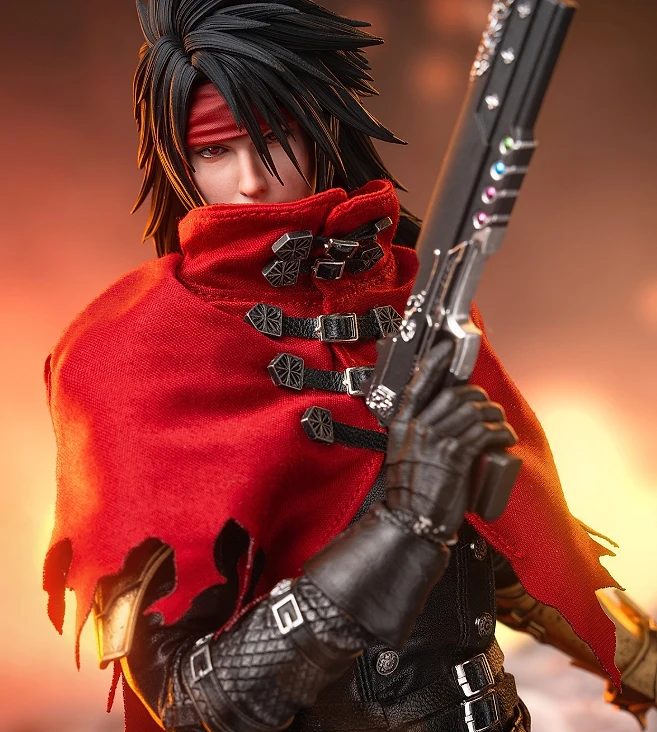
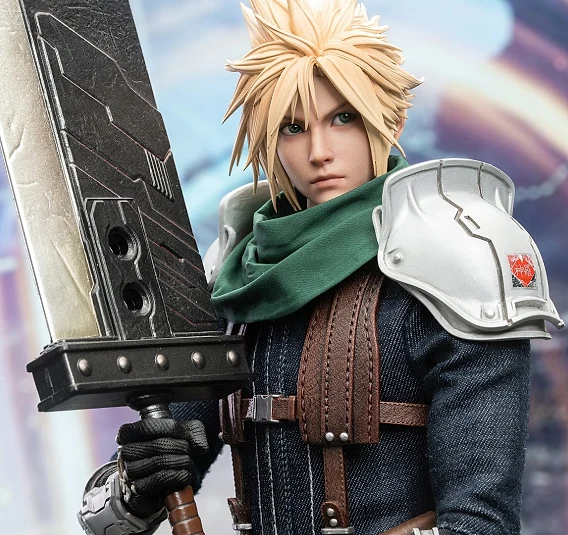
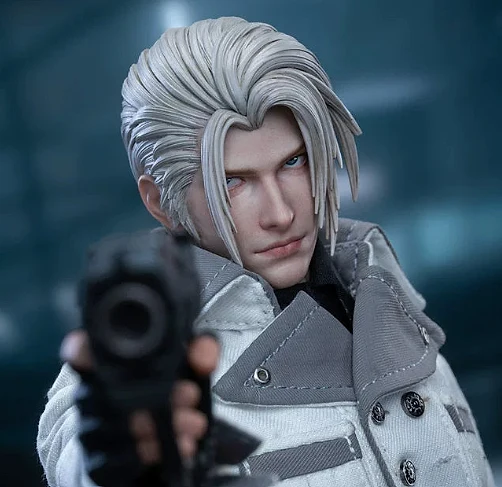
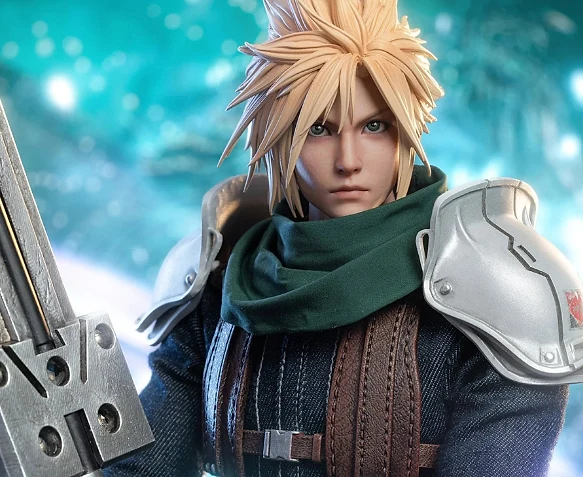
[Super Duck](/manufacturer/super-duck) has covered more of the series than most, from [Yuna](/character/yuna) and Lightning to Lunafreya, Cindy and Tifa. [VTS Toys](/manufacturer/vts-toys) made Cloud and [Zack Fair](/character/zack-fair), including an Advent Children Cloud, and [GameToys](/manufacturer/gametoys) added Cloud, Sephiroth, Noctis Lucis Caelum and the Fenrir motorcycle. [Toys Battalion](/manufacturer/toys-battalion) has turned to Shinra itself, with Turks, soldiers and Rufus alongside Vincent Valentine, while [SW Toys](/manufacturer/sw-toys), [Toys Era](/manufacturer/toys-era) and others bring their own takes.
Final Fantasy VII rules this shelf, and Tifa is one of its most collected characters, Cloud included. Collectors usually choose a game and an outfit first, the original, Advent Children or the Remake era, and then a maker, because each studio's face sculpts read the characters differently. Side characters, villains and the odd motorcycle turn a pair of heroes into a scene from Midgar.
The most defiant name in entertainment belongs to a series on its sixteenth numbered world. Final Fantasy has spent four decades being neither final nor, strictly, one fantasy: every mainline entry throws away the previous universe and builds a new one, keeping only chocobos, crystals, a man named Cid, and the conviction that a video game can break your heart. At sixth scale it is the Archive's great unlicensed kingdom, kept alive entirely by the coded ateliers.
Fair warning: this is a love letter. The dates are sourced and the numbers are ours, and if a victory fanfare plays quietly in your head while reading, that is normal. It has been playing since 1987 for everyone.
As the story goes, the name was literal: in 1987 Square was struggling, Hironobu Sakaguchi was considering leaving games altogether, and the role-playing epic he bet everything on was named like a farewell. Final Fantasy instead became the reason the company survived, and the name calcified into the industry's favorite irony: a "final" anything now on its sixteenth mainline world and countless spinoffs.
The series' real signature was creative recklessness as policy. Each numbered entry abandons its predecessor's world, cast and rules entirely, a franchise structured like an anthology of universes. It is the anti-franchise franchise, held together not by continuity but by texture: summons and airships, crystals and Cids, and stories willing to go somewhere sincere while the rest of the industry was still clearing its throat.
In 1997 Final Fantasy VII arrived on PlayStation and globalized the Japanese role-playing game in a single stroke: a mercenary with an impractical sword, a flower seller in the slums, a city that was one giant machine, and a mid-story death so seismic that gaming still refers to it obliquely, out of respect, as though it happened to a mutual friend. Cloud Strife's silhouette became one of the medium's permanent icons, and Sephiroth became its permanent nightmare, one black wing and a choir.
The 2005 film Advent Children then handed this hobby its aesthetic wellspring, redesigning the cast in cinematic detail begging for tailoring, and the Remake era from 2020 onward re-lit the whole universe for a new generation. The Archive's numbers show what that compounding devotion built: the Seventh's universe accounts for two of every three Final Fantasy figures here. One world, out of sixteen, owns the shelf.
Here is what makes this catalogue unique among the Archive's major franchises: none of it is official. Square Enix keeps its figures in-house at smaller scales, and no sixth-scale licence has ever been granted, so this entire kingdom was built by the coded ateliers, ten different makers strong, working from love and plausible deniability. The naming conventions are the hobby's found poetry: Super Duck leads the catalogue with fourteen entries bearing titles like Fantasy Fighting Goddess and Summoner, Toys Battalion fields nine, and GameToys sets the craft standard with seven fully-built figures whose buster swords need no codename to identify.
Ten makers, not one licence among them, and yet the coverage runs from Midgar to Spira to Eos. Where official channels declined to go, the ateliers simply went. This Archive, which documents rather than judges, notes only that the kingdom exists, that it is thriving, and that its tailors clearly finished the games.
The most collected Final Fantasy character in this Archive is not the man with the sword. It is Tifa Lockhart, seven figures to Cloud's six, and the pattern holds down the whole leaderboard: Yuna matches Sephiroth at four, appearing in both her summoner robes and her X-2 era, with Aerith Gainsborough, Lightning and Lunafreya close behind. Count the top of the board and the women of Final Fantasy comfortably out-collect its men.
It is a fitting inversion for a series whose most famous moment is about losing one of those women, and whose emotional architecture was always carried as much by its healers, summoners and bartenders as by its brooding swordsmen. The shelves, as usual in this Archive, have quietly voted for the heart of the story rather than the poster.
All told: 41 Final Fantasy figures from ten manufacturers, spanning 2018 to 2026, every one of them unofficial and most of them magnificent. It is the Archive's most fragmented franchise by maker and its most concentrated by world, a kingdom where the Seventh reigns and the ateliers keep the borders open.
The name promised an ending four decades ago and has been gloriously wrong ever since. The Archive expects to keep filing these entries for as long as there are crystals to shatter and bars in Sector 7 to tend. Nothing here is final. That was always the joke, and the fanfare plays on.

One notice from collectors about Final Fantasy, newest first
FIGURE NEWSNo. 3315